
Imagine standing on a dark pier, watching a distant red and white light glide past. Why don’t ships use bright headlights? According to maritime experts, standard beams simply blind other boaters on the reflective water.
Instead, vessels use marine navigational lights as a visual communication system. Governed by collision avoidance regulations at sea, these colored bulbs are cleverly shielded so they are only visible from specific sides. This directional setup transforms boat navigation lights into a vital tool showing exactly where a ship is heading to prevent crashes.
Cracking this maritime code gives you a mental decoding book for the water, allowing you to confidently determine right-of-way in the dark.
Red Port Left: Master the Three Core Colors of Navigation
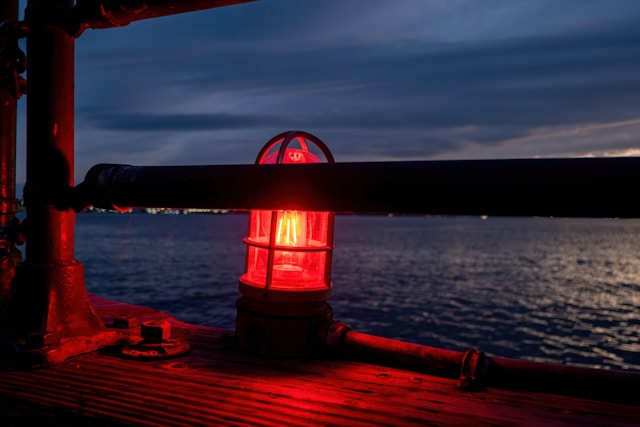
On land, red means stop and green means go, but out on the water, these colors tell a different story. Every vessel uses boat navigation lights to broadcast its orientation in the dark. To decode this secret language, just remember one simple question: “Is there any red port left?” This mnemonic reminds you that a boat’s port (left) side always glows red, while the starboard (right) side shines bright green.
When spotting a vessel at night, the colors visible depend entirely on your angle. Here is the basic breakdown:
- Port (Red): Visible only from the boat’s left side.
- Starboard (Green): Visible only from the boat’s right side.
- Stern (White): A single bright light on the back, visible strictly from behind.
Because of this specific stern light placement, a lone white dot in the distance gives you a crucial piece of information: that ship is safely moving away from you. But what happens if you see both port and starboard light colors at once? Understanding how these side angles overlap helps you quickly interpret the situation ahead.
Decoding Ship Direction: What Your ‘Traffic Light’ View Reveals
Spotting a red and green light side-by-side in the dark is an immediate warning. Much like seeing both eyes of an animal caught in your headlights, this combination of boat running lights means the vessel is heading straight toward you. You are directly in the danger zone.
Figuring out who moves first when paths cross relies on simple “Hallway Logic.” If you see another ship’s red port light approaching from your right, treat it like a stop sign. You must slow down or change course to yield, regardless of exactly what lights a boat must show at night based on its specific size.
On the other hand, a solitary green starboard light sliding across your view changes everything. Seeing that green signal is the ocean’s way of giving you the “green light” to maintain your current course. The other captain is looking at your red side, so their boat navigation lights require them to stay out of your way.
This intuitive right-of-way system prevents collisions during casual evening cruises. Yet, you will often notice bright white bulbs hovering high above these colored signals, revealing exactly how massive a ship truly is.
Power and Precision: Navigating with Masthead and All-Around Lights
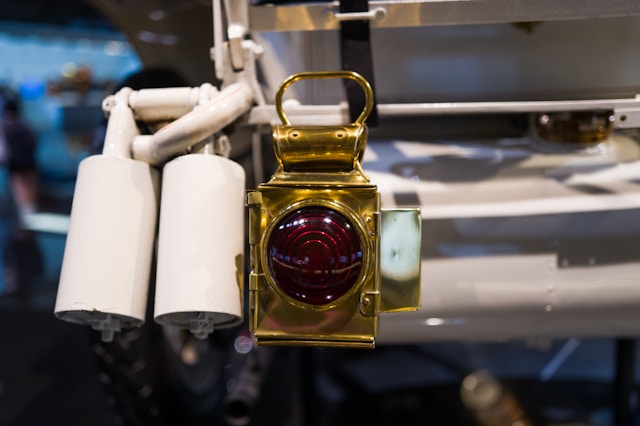
Spotting colored side signals is crucial, but they only tell part of the story without the bright white beacons hovering above them. This elevated forward-facing bulb is a masthead light, required for COLREGs Rule 23 power-driven vessels to clearly indicate they are actively running an engine. Much like a train’s headlight, this upper signal cuts through the dark to broadcast a ship’s forward movement to anyone in its path.
How far away you can spot these elevated beacons depends entirely on the ship’s physical footprint. Under USCG approved vessel lighting standards, giant commercial cruise ships must project their white lights up to six miles away, providing safe reaction times for everyone sharing the water. Meanwhile, a standard family motorboat only requires a two-mile visibility range, perfectly matching its much quicker stopping distance.
Since towering masts aren’t practical for tiny unpowered boats, kayakers and dinghies rely on a single all-around white light for small craft. Glowing 360 degrees like a floating streetlamp, it guarantees visibility from every possible angle—provided your boat has the reliable battery power to keep it shining all night.
LED vs. Halogen: Upgrading Your Vessel’s Efficiency and Reliability
Keeping those white anchor lights glowing all night requires power, which is tricky when your boat relies on a single battery. While traditional halogen bulbs were once the standard, modern boat led lights are game-changers. When comparing LED vs halogen maritime light efficiency, the newer technology acts like an energy-saving superhero for your vessel.
This modern upgrade offers three distinct advantages over older bulbs:
- Power draw: LEDs sip electricity instead of gulping it, saving massive battery power.
- Heat: They stay safely cool to the touch, unlike scorching halogens.
- Lifespan: They easily shine for thousands of hours longer without needing replacement.
For an even simpler setup, utilizing solar powered anchor light benefits lets the sun charge an independent light battery all day for free.
Even the brightest bulbs will flicker if harsh ocean spray ruins their wiring. Fortunately, preventing corrosion in saltwater electrical connections is simple using dielectric grease—a special waterproof gel that seals metal contacts from moisture and keeps your critical power lines protected.
Your Roadmap to Safe Night Cruising: Maintenance and Quality Gear
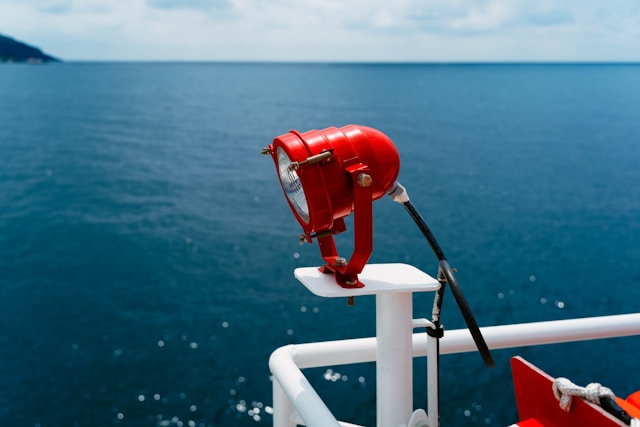
You no longer look at a dark harbor and just see random colored dots. You can now read the secret language of the sea, confidently decoding marine navigational lights to understand exactly where a vessel is heading and who has the right of way.
Put this new knowledge into action by performing a simple two-minute pre-departure check before leaving the dock. If you spot a problem, start troubleshooting flickering boat lighting systems by checking for loose wire grounds or simple saltwater corrosion, as these are almost always the culprits behind a failing bulb.
Reliable visibility is your absolute best defense on the water. Before your next evening adventure, ensure your vessel’s lighting meets USCG standards with high-quality gear from trusted maritime suppliers like brtmarine.com, ensuring your time on the water remains safe, fully illuminated, and strictly legal.